

A few years ago, decorative panels were mostly found in hotels and corporate offices. Today they are one of the most searched interior products for homes across India. Walk into almost any new apartment in Mumbai, Bangalore, Hyderabad, or Ahmedabad and there is a good chance you will spot a feature wall done up in some kind of panel treatment.
But with so many products in the market and so much noise online, figuring out what actually works in a real Indian home is harder than it sounds. There is a difference between what looks good in a showroom and what holds up in a house where the kitchen sees serious cooking, the humidity varies with the season, and kids are running around.
This guide is meant to cut through all of that. We will cover what decorative interior panels are, the main types you will come across, where each one works best, and what to watch out for before you spend money.
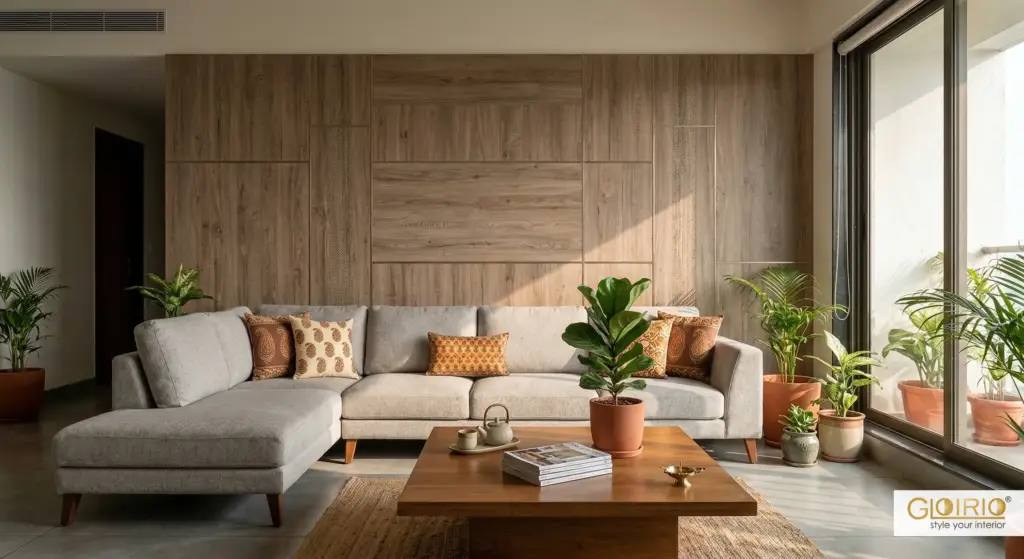
What Are Decorative Interior Panels
Decorative panels are surface materials fixed directly to walls to add texture, colour, pattern, or architectural depth. Unlike paint or wallpaper, they have physical presence. They sit on the wall rather than just coating it, which means they change how light falls across the surface and how a room feels when you walk into it.
They are used in living rooms, bedrooms, kitchens, offices, restaurants, retail spaces, and practically every other kind of interior. The range of what falls under the label is wide, but most of what you will find in the Indian market fits into a few clear categories.
The Main Types of Decorative Interior Panels
Laminate Panels
These are the most commonly available decorative panels in India and the most practical for most applications. A quality laminate panel has a decorative surface layer bonded to a structural board underneath. The surface can be textured, smooth, wood-effect, stone-effect, solid colour, or abstract. The range of looks is genuinely enormous.
What makes laminate panels well-suited to Indian conditions is durability. Good laminates handle humidity, temperature changes, and everyday wear without peeling, warping, or fading. Gloirio’s panel catalogues including Canex, Celesto, Deconet, Miracco, and Stencil all fall into this category and cover a wide range of aesthetics from contemporary to classic.
Textured and 3D Panels
These panels have actual physical depth. The surface is sculpted or embossed to create patterns that cast shadows as light moves across them. A textured panel wall looks different in the morning than it does in the evening, which gives a room a dynamic quality that flat surfaces cannot achieve.
Gloirio’s Stencil panels are worth a specific mention here. They come with rich three-dimensional texture in a paintable neutral finish, meaning the colour is your choice. That level of creative freedom is rare in the panel category and makes Stencil a favourite among interior designers working with specific colour palettes.
Louver and Slatted Panels
These use vertical or horizontal slats to create a ribbed, rhythmic wall surface. They are among the fastest-growing panel types in India right now. The appeal is partly visual and partly about the architectural quality they bring to a room. We have dedicated Blog 4 to louver panels specifically.
Cane and Natural Fibre Panels
Cane weave panels have had a serious revival in Indian homes over the last two or three years. They bring warmth, a natural texture, and a handcrafted quality that no synthetic material fully replicates. Blog 6 goes deep on cane panels.
Acrylic Panels
High gloss acrylic surfaces are the premium end of the panel market, used mainly for kitchen shutters, wardrobes, and statement furniture fronts. Blog 5 covers acrylic laminates in detail.
What to Think About Before You Choose
The Room and Its Conditions
A living room needs a panel that creates a strong visual impression. A bedroom needs something that feels warm and restful. A kitchen needs a surface that handles moisture, grease, and repeated cleaning. Start by being honest about the conditions the panel will face before you fall in love with a design.
The Climate in Your City
India has a wide range of climate conditions. Coastal cities like Mumbai and Chennai bring sustained high humidity. Cities in the interior like Delhi and Ahmedabad see extreme temperature swings between summer and winter. Gloirio engineers its surfaces to perform across these conditions, but it is worth discussing your location with a dealer when choosing.
Installation and Maintenance
Some panel types need skilled installation. Others are far more forgiving. Think about whether you want a panel you can clean with a damp cloth or one that needs more care. Think about whether you are making a permanent change or want the option to update the space in a few years. The answers will guide you toward the right product category.
How to Use Decorative Panels Well
The single most common mistake people make with decorative panels is using them on too many surfaces. Panels work because they are contrast. Cover every wall and you lose that effect entirely.
Choose one or two walls in a room. Pick the walls your eye naturally goes to when you walk in. Treat those as the design statement and keep everything else simple. A single well-executed panel wall can carry an entire room.
Lighting is the other factor most people underestimate. A recessed LED strip above a textured panel, or a directional light hitting a 3D surface, transforms what the panel looks like in the evening. The investment in good lighting pays back many times over in the final result.
Browse the complete Gloirio decorative panel range at gloirio.com. Over 2,000 dealers across PAN India.
Frequently Asked Questions
Are decorative interior panels suitable for all rooms in an Indian home?
Most high-quality decorative panels are suitable for living rooms, bedrooms, dining areas, and home offices. For kitchens and bathrooms, you need products specifically rated for moisture exposure. Ask your Gloirio dealer which products in the range are approved for wet or high-humidity applications.
How long do decorative panels last in Indian conditions?
A good quality laminate panel from a reputable manufacturer should last fifteen years or more without significant deterioration under normal indoor conditions. The key factors are the quality of the surface coating, the bond between the decorative layer and the substrate, and how well the installation was done.
Can I use decorative panels in a rented apartment?
Yes, with the right fixing method. Some panel systems use reversible adhesive solutions that can be removed without significant wall damage. Discuss this specifically with your Gloirio dealer before purchase if you are in a rented property.
What is the difference between a decorative panel and a wall laminate sheet?
Wall laminate sheets are thin surface materials typically bonded to furniture or MDF by a fabricator. Decorative panels are purpose-made wall surface products that arrive ready for direct wall installation, usually thicker, and engineered to perform as the final wall surface.